Golfers often overlook the importance of fresh grips on their clubs. Studies show that worn grips can cost you up to 10 yards in distance and reduce accuracy by 20 percent. Regripping your clubs restores control and confidence. It also extends the life of your equipment. This guide will walk you through the process with ease.
Regripping golf clubs is a simple task that most golfers can do at home. You only need a few tools and a bit of patience. Fresh grips improve traction and comfort during swings. They also prevent slippage in wet or humid conditions. Top golf clubs often come with high-quality grips but still require regular maintenance.
Why Regripping Your Golf Clubs Matters
Grips wear out over time due to sweat, dirt, and repeated use. A smooth grip reduces friction between your hands and the club. This lack of traction can lead to inconsistent shots. It also increases the risk of the club twisting during impact. Fresh grips ensure a firm hold in all weather conditions.
Golfers in humid climates face additional challenges with grip maintenance. Moisture accelerates the breakdown of rubber materials. This makes regripping even more critical for players in tropical regions. Regularly changing grips keeps your clubs feeling new. It also helps maintain consistency in your swing mechanics.
Signs Your Golf Clubs Need New Grips
Visible cracks or smooth patches on the grip surface are clear signs. If your hands slip during the swing, the grip has likely lost its tackiness. Hardened or shiny grips also indicate it is time for a replacement. These issues affect both performance and comfort on the course.
Another sign is the loss of the original texture or pattern. Most grips feature a distinct design for better hold. When this design fades, your control over the club diminishes. Golf club distance can also suffer if your grip is not up to par.
Tools and Materials You Will Need
Gather a utility knife or grip hook for removing old grips. You will also need double-sided grip tape and a rubber vise clamp. A solvent like mineral spirits or grip solvent helps slide new grips on easily. Have a clean cloth and measuring tape ready as well.
Choose grips that match your hand size and playing style. Standard, midsize, and jumbo grips are common options. Consider the material too, as rubber, corded, and hybrid grips offer different feels. Junior golf clubs may require smaller grips for younger players.
Step-by-Step Guide to Regripping Golf Clubs
Step 1: Remove the Old Grip
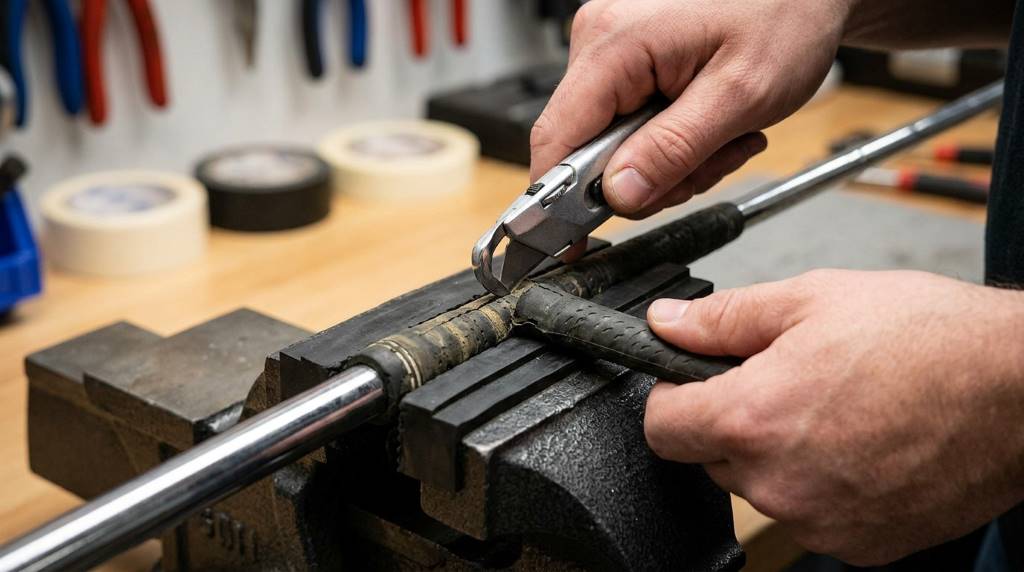
Secure the club in a vise with a rubber clamp to avoid damaging the shaft. Use a utility knife to carefully cut the old grip lengthwise. Peel the grip away from the shaft in one piece. Remove any remaining adhesive or tape with a cloth and solvent.
Be cautious not to scratch the shaft during this process. A damaged shaft can weaken the club and affect performance. Work slowly and methodically to ensure a clean removal. This step sets the foundation for a smooth regripping process.
Step 2: Clean the Shaft
Wipe the shaft thoroughly with a solvent-soaked cloth. This removes any leftover adhesive or residue. A clean surface ensures the new grip tape adheres properly. Allow the shaft to dry completely before proceeding to the next step.
Inspect the shaft for any signs of wear or damage. If the shaft is bent or cracked, consider replacing it entirely. A damaged shaft can compromise the integrity of your club. Proper maintenance extends the life of your equipment.
Step 3: Apply New Grip Tape
Wrap a strip of double-sided grip tape around the shaft where the grip will sit. Start at the top of the shaft and spiral downward. Overlap the tape slightly to ensure full coverage. Press the tape firmly to secure it in place.
Leave a small gap at the end of the shaft for the grip cap. This ensures a snug fit when the new grip is installed. The tape provides the necessary adhesion for the grip to stay in place. Proper application prevents the grip from twisting during use.
Step 4: Prepare the New Grip
Pour a small amount of solvent into the new grip. Swirl it around to coat the inside evenly. This lubricates the grip and makes it easier to slide onto the shaft. Shake out any excess solvent before installation.
Check the grip for any defects or imperfections before installation. A damaged grip can affect performance and comfort. Ensure the grip is the correct size for your hand. Proper preparation guarantees a smooth and secure fit.
Step 5: Install the New Grip
Align the grip with the clubface and push it onto the shaft. Twist slightly as you push to ensure even coverage. Continue until the grip is fully seated against the shaft. Wipe away any excess solvent with a clean cloth.
Allow the grip to dry for at least an hour before use. This gives the adhesive time to set properly. Avoid using the club until the grip is fully secured. Patience ensures a long-lasting and effective regripping job.
Tips for Regripping Golf Clubs Like a Pro
Work in a well-ventilated area when using solvents. Fumes can be strong and harmful if inhaled. Wear gloves to protect your hands from solvents and sharp tools. Safety should always be a priority during any DIY project.
Consider regripping all your clubs at once for consistency. This ensures a uniform feel across your entire set. It also saves time and effort in the long run. Regular maintenance keeps your clubs in top condition.
Common Mistakes to Avoid When Regripping
Rushing the process can lead to misaligned or loose grips. Take your time to ensure each step is done correctly. A poorly installed grip can affect your swing and performance. Precision is key to a successful regripping job.
Avoid using too much solvent, as it can weaken the adhesive. Follow the manufacturer’s instructions for best results. Over-saturating the grip can also make it difficult to handle. Balance is essential for a secure and effective installation.
How Often Should You Regrip Your Golf Clubs?
Most golfers should regrip their clubs every 40 to 60 rounds. If you play frequently, consider regripping once a year. Humid climates may require more frequent changes due to increased wear. Regular inspection helps determine when replacements are needed.
Storage conditions also affect grip longevity. Keep your clubs in a dry, temperature-controlled environment. Avoid leaving them in direct sunlight or extreme heat. Proper care extends the life of both your grips and clubs.
Unique Discussion: Regripping for Different Climates
Golfers in tropical climates face unique challenges with grip maintenance. High humidity and heat accelerate the breakdown of grip materials. Choosing grips designed for wet conditions can improve durability. These grips often feature textured surfaces for better traction.
In colder climates, grips may harden and lose flexibility. This reduces their ability to absorb shock and provide comfort. Storing clubs indoors during winter months can help preserve grip quality. Regularly inspecting grips ensures they remain effective in all conditions.
Conclusion
Regripping your golf clubs is a simple yet impactful way to improve your game. Fresh grips enhance control, comfort, and consistency on the course. With the right tools and techniques, you can regrip your clubs like a professional. Start today and experience the difference for yourself.
Do not wait until your grips are completely worn out. Regular maintenance keeps your clubs in optimal condition. Share this guide with fellow golfers to help them elevate their game. Happy regripping!
FAQ
How long does it take to regrip a golf club?
Regripping a single club typically takes about 10 to 15 minutes.
Can I reuse old grip tape when regripping?
No, always use fresh grip tape for the best adhesion and performance.
What is the best solvent for regripping golf clubs?
Mineral spirits or a specialized grip solvent work best for most grips.
Do I need a vise to regrip my golf clubs?
A vise is helpful but not required. You can secure the club with a clamp or heavy object.
How do I know if my grips are too small or too large?
Your fingers should lightly touch your palm when holding the club with a proper grip.