If you play golf in Washington, you know the drill: soft fairways, coastal winds, and courses that stretch long and play even longer in the damp air. Finding a driver that delivers genuine distance isn’t just about swinging harder—it’s about matching your launch characteristics to the conditions you face most often. The problem is that the market is flooded with claims of “maximum distance,” and most of those promises fall flat on real courses. This guide breaks down exactly how to choose a driver that actually adds yards for your game in the Pacific Northwest, focusing on the technical fit, course-specific realities, and the equipment decisions that matter most. You’ll learn what to prioritize, what to avoid, and how to make a confident purchase—whether you’re in Seattle, Spokane, or anywhere in between.
Key Takeaways
- Washington’s wet turf and frequent wind make launch angle and spin control more important than raw clubhead speed for maximizing roll and carry.
- Matching a driver’s shaft flex and weight to your swing tempo is often a bigger distance factor than the driver head model itself.
- A higher-lofted driver (10.5° or more) is usually the right call for most players in Washington’s cooler, denser air to achieve optimal launch.
- Adjustable weights and hosels are worth the investment when you play multiple courses with varying weather, as they let you fine-tune ball flight.
- Before buying any premium model, compare it against your current driver’s numbers on a launch monitor to confirm real yardage gains.
Why “Distance” Means Something Different in Washington
Distance is never an absolute number. It’s a product of your swing, the ball, and the environment. In Washington, the environment plays a more significant role than most golfers realize. Cooler temperatures and higher humidity make the air denser, which increases drag on the golf ball. This means the ball doesn’t fly as far as it would in warmer, drier states like Arizona or Texas. On top of that, many of the state’s top courses are built on rolling terrain with firm, fast-running fairways in the summer, but soft, rain-saturated fairways in the spring and fall. A driver that relies on roll to achieve distance will underperform on a wet October morning. What you actually need is a driver that produces a higher, more penetrating ball flight with controlled spin to maximize carry distance.
For a deeper look at specific models and local buying considerations, you can check out this detailed resource on distance golf drivers in Washington State. That guide covers current options, but here we’re focusing on the selection process so you can make your own informed decision.
What to Look for in a Distance Driver for PNW Conditions
When you’re shopping, don’t get distracted by marketing jargon like “aerodynamic crown” or “speed pocket.” Instead, focus on a few core performance specs that directly translate to distance in the conditions you’ll face. The priority order is launch angle, spin rate, and then forgiveness. Many golfers make the mistake of buying a low-spin, low-launch head because they think it will give them a “boring” flight that pierces the wind. But in cooler, denser air, a low-launch driver often results in a ball that comes up short—it simply doesn’t have enough height to stay in the air long enough to maximize carry. Conversely, too much spin can cause the ball to balloon in the damp air, killing both carry and roll.
Launch Angle and Spin: The Critical Balance
The best distance drivers for this region tend to sit in the mid-launch, mid-spin category. You want to launch the ball in the 12-to-15-degree range depending on your attack angle, with spin rates ideally between 2,200 and 2,600 RPM for most players. This combination gives you enough height to carry the ball over soggy fairway edges while keeping spin low enough to prevent the ball from stalling against a headwind. If you have a steep swing or a slower swing speed, you’ll likely need a higher-lofted head (10.5 to 12 degrees) to get the launch you need. Players with high swing speeds and a shallower attack angle can often use a 9-degree head without sacrificing carry.
Shaft Selection: The Most Overlooked Distance Factor
The shaft is where distance is truly won or lost. A shaft that is too stiff or too heavy for your tempo will cause you to lose clubhead speed or miss the sweet spot, which is the biggest distance killer of all. For the average male golfer swinging around 90-95 mph, a regular flex shaft in the 50-60 gram range is typically the best balance of control and speed. If you swing faster, a stiff flex or even an X-stiff might be necessary—but only if your tempo is aggressive enough to load the shaft properly. In Washington’s damp conditions, a slightly softer tip section can also help you get the ball up in the air more easily, which aids in carrying those longer par 5s. Don’t buy a driver until you’ve tested at least two different shafts in the same head.
Optimizing Driver Selection for Diverse Pacific Northwest Turf and Climates
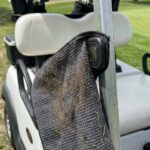
Course conditions play a pivotal role in dictating your optimal driver configuration, as playing a wind-swept links design like Chambers Bay demands a vastly different strategy than navigating a tree-lined lowland municipal course in the Puget Sound. On firm, sun-baked summer fairways, lower-lofted driver heads allow you to maximize total yards through aggressive roll-out. Conversely, damp Pacific Northwest winters and undulating coastal terrains require higher launch angles and optimized spin rates to carry hazards and achieve predictable landing angles. Because wet Northwest turf can quickly accumulate grit on your gear, maintaining clean equipment is just as critical to performance as your launching metrics; knowing clean magnetic golf towel magnets safely ensures your accessories stay functional through every soggy round.
Firm vs. Soft Fairways
If you mostly play courses with good drainage and firm conditions (common on the east side of the state), a lower spin driver (under 2,300 RPM) will give you enormous roll out. However, on the west side, where courses are often built on clay-heavy soil, rain can leave fairways spongy for days. In those conditions, any roll is minimal, so you need to maximize carry. This is a crucial distinction: you might be able to play a 9-degree driver in Spokane, but a 10.5-degree driver in Tacoma will likely produce better total distance.
Wind Management vs. Carry
Coastal winds in places like Bellingham or Ocean Shores can wreak havoc on a high-spin ball. Here’s the trade-off: while you want a high launch for soft fairways, you also need to control spin to prevent the ball from getting knocked down by a gust. Look for a driver with a lower center of gravity (CG) that is positioned slightly forward. This promotes a high launch with lower spin, which is the ideal profile for playing into a breeze while still getting the carry you need. It’s the same reason long-drive competitors use low-spin heads—they just apply that logic to a playable loft. Keep in mind that the CG position is a key spec that separates good “distance” drivers from great ones.
Forgiveness: The Real Distance Saver
Distance isn’t just about your best strike; it’s about your average strike. The 20-yard loss you suffer on a toe strike when playing in the rough is a distance killer that a hot-faced driver can’t correct. This is where forgiveness—measured by moment of inertia (MOI)—becomes essential. A high-MOI driver retains ball speed and reduces curvature on off-center hits. For the average player, a forgiving driver is a better distance investment than a low-spin “pro” model that you can’t hit consistently. You should look at the size of the clubface and the position of the weight. A large face with weight pushed back and low in the sole provides the most stability and helps get the ball airborne. This is especially helpful when you’re playing marshy lies or hitting off slightly uneven tees, which is common on the many hilly courses in the state.
Step-by-Step Guide to Testing Drivers
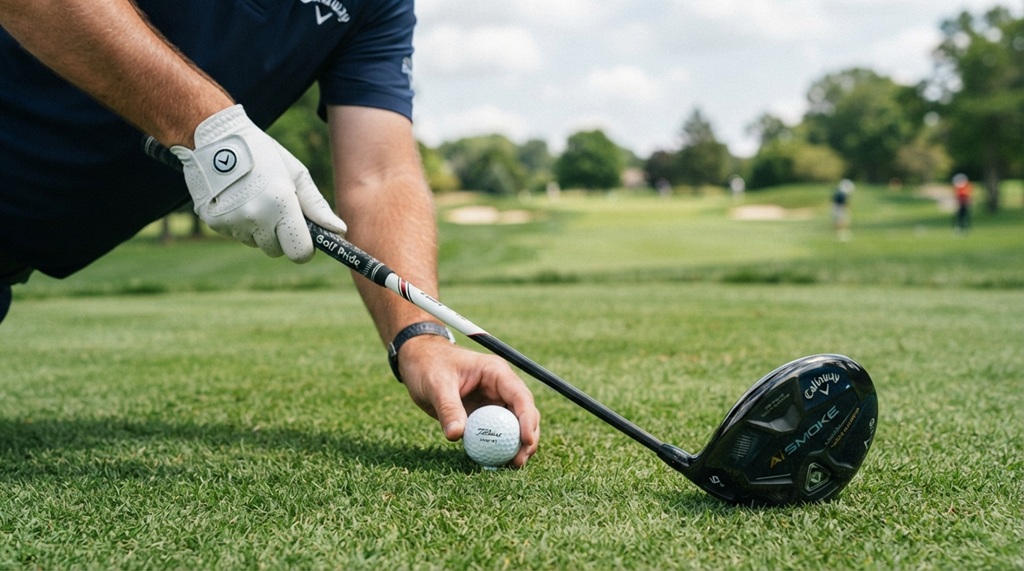
Simply walking into a golf store and hitting a few balls into a net isn’t enough. You need a structured process to ensure the driver you choose is actually the right fit. Here is the method that yields the most reliable results, especially when you’re trying to solve a specific distance problem.
- Get your baseline: Hit your current driver on a launch monitor and record your average carry distance, total distance, launch angle, spin rate, and swing speed. Don’t just look at the one perfect strike—average your numbers over 10 quality swings.
- Test with a mission: When trying a new driver, don’t just hit it. Look at the numbers in relation to your baseline. Did your launch angle increase or decrease? Is your spin rate in the optimal window for your swing speed?
- Change one variable at a time: If you try a new head, try it with the same shaft as your current driver first. This isolates whether the head is actually better for you. Then, once you settle on a head, try different shaft flexes and weights.
- Compare the averages: A new driver might give you one miraculous 300-yard strike, but if your other nine swings are all shorter than your old driver, it’s not a better driver. Compare the average of your honest swings, not the best.
Which Driver Specs Should You Prioritize? A Quick Comparison
To make the decision process smoother, here’s a practical breakdown of how different specs align with the conditions you’ll face in Washington. This table summarizes the trade-offs so you can match your priority to your needs.
| Condition You Face | Ideal Driver Loft | Ideal Spin Range | Key Thought |
|---|---|---|---|
| Wet/Soggy Fairways (Winter) | 10.5° – 12° | 2,400 – 2,700 RPM | Maximize carry; spin is your friend to keep the ball in the air. |
| Firm/Fast Fairways (Summer) | 9° – 10.5° | 2,000 – 2,300 RPM | Lower spin for added roll; you can sacrifice a little carry for total distance. |
| Windy/Coastal Courses | 10.5° | 2,200 – 2,400 RPM | Look for a forward-low CG to keep the flight penetrating. |
| High Swing Speed (105+ mph) | 9° – 10.5° | 2,100 – 2,400 RPM | Focus on shaft stiffness to control spin; the head is less critical. |
| Moderate Swing Speed (85-95 mph) | 10.5° – 12° | 2,500 – 2,800 RPM | Higher loft and a lighter shaft are essential to getting the ball up. |
Mistakes to Avoid When Buying a Long-Distance Driver
There are three common errors that plague golfers looking for more distance. The first is buying a regular flex shaft when you need a stiff, or vice versa, simply because you wanted a particular brand. The second is assuming that a 9-degree driver is for “better” players. That’s a myth. The correct loft is based on your launch angle and spin, not your handicap. The third mistake is ignoring the off-center hits. If you’re an 18-handicapper, you will miss the sweet spot regularly. You need a driver that compensates for that, not one that punishes it. Pay attention to the numbers on your worst strikes, not just your best. If a driver loses a minimal amount of distance and dispersion on a toe hit, that’s the one worth buying.
Frequently Asked Questions
Is a higher-lofted driver better for all golfers in Washington?
Not necessarily. It depends on your clubhead speed and angle of attack. But for most golfers with moderate swing speeds (under 100 mph), a 10.5 to 12-degree loft is better suited to the cool, wet air because it helps produce the launch angle needed for maximum carry. Players with high swing speeds can still use a 9-degree loft effectively.
Do I need a special shaft for the wind and rain?
You don’t need a special shaft, but you should pay attention to the weight and flex. A slightly softer tip can help launch the ball higher in dense air. A heavier shaft (70g+) can help players with fast tempos maintain control in windy conditions, but for most players, a 50-60g shaft is best for generating optimal clubhead speed.
How important is adjustability for a distance driver?
Adjustability is quite valuable for players who experience a range of conditions. If you play both links-style courses with firm fairways and parkland courses with soft fairways, being able to adjust loft from 9 to 11 degrees is a real advantage. Just make sure you understand the setting and get the club fitted on the launch monitor once you’ve set it to your baseline.
Will a draw-bias driver help me hit it farther?
A draw-bias driver can help eliminate a slice, which is a massive distance leak. If you lose 30-40 yards to the right, a draw-bias head and weight position can help you hit more fairways and gain significant distance immediately. It’s often a simpler and more effective distance fix than spending money on a new low-spin head.
Conclusion
Selecting the right distance golf driver in Washington state comes down to understanding your own numbers and matching them to the weather and turf conditions you’ll face, not just buying the longest-looking club on the rack. Prioritize launch angle and spin control over pure head size, and never underestimate the shaft’s role in creating clubhead speed. Test with a purpose: compare averages, not best strikes, and pay close attention to how the driver performs on off-center hits. A forgiving, high-launching driver with a mid-spin profile is the most reliable formula for adding yards in the Pacific Northwest. Take your time, get fitted, and the long drive will follow.