Walking into your first scramble tournament can feel confusing. Everyone seems relaxed, yet teams post surprisingly low scores. Beginners often assume scramble golf is casual and random. It isn’t. Teams that plan roles, control risk, and manage shots correctly gain a serious scoring advantage.
Most first-time players lose strokes before the round even begins. They misunderstand tee order, pick poor shot selections, or waste safe opportunities. The result is frustration and missed chances for birdies.
This guide explains exactly how to golf scramble strategy for first-time tournament players using practical decisions that improve team scoring immediately. You’ll learn how strong teams think, plan, and execute throughout the round.
What Is the Best Basic Golf Scramble Strategy for Beginners?
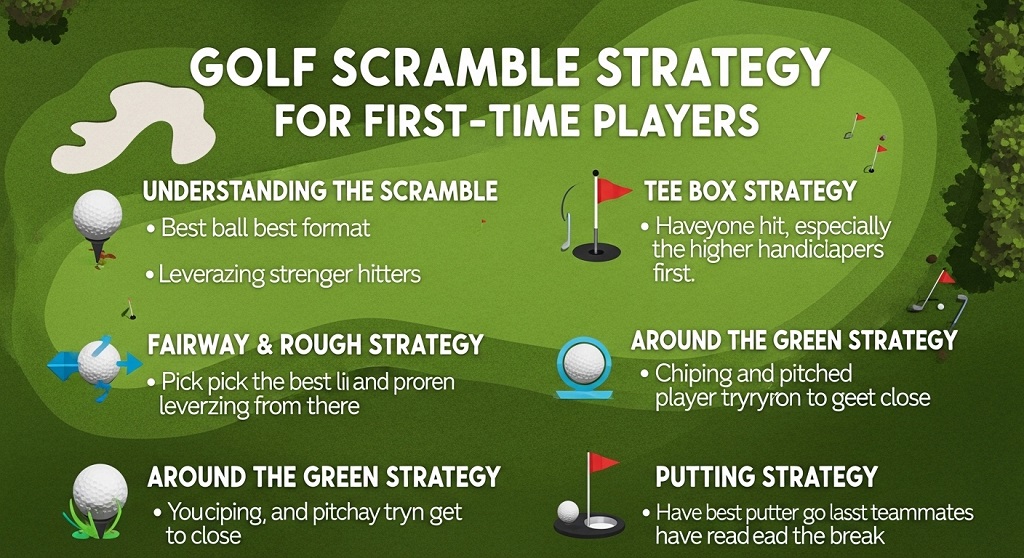
A first-time scramble strategy focuses on smart tee order, selecting safe early shots, letting aggressive players attack later, maximizing putting confidence, and avoiding unnecessary risks. Teams score lower when each player follows a defined role instead of hitting randomly on every shot.
In scramble golf, all players hit each shot. The team selects the best result and repeats from that location. This creates opportunities to combine strengths and eliminate mistakes.
Beginners often treat every swing equally. Strong teams don’t. They assign structure.
Start by identifying player strengths:
- Longest hitter
- Most accurate driver
- Best iron player
- Most confident putter
These roles shape shot order throughout the round.
Early hitters should prioritize safe positioning. Later hitters can attack aggressively because the team already has a playable shot secured.
This reduces pressure and increases scoring chances on:
- Par 4 approaches
- Par 5 second shots
- Short wedge entries
- Birdie putts
Scramble tournaments reward consistency, not hero shots. Teams that avoid penalty strokes almost always outperform teams with higher individual talent but poor coordination.
How Should Teams Decide the Correct Tee Shot Order?
The ideal tee shot order starts with the most accurate driver, followed by consistent players, and ends with the longest hitter attacking aggressively. This structure ensures a safe ball in play before riskier swings attempt distance advantages.
Tee shot order determines the entire hole’s scoring potential.
Many beginner teams place their longest hitter first. This is inefficient. If the long hitter misses, pressure increases immediately.
Instead, follow this proven order:
- Accuracy-first player hits safely into fairway
- Consistent mid-distance hitter improves position
- Strategic player adjusts for angle advantage
- Longest hitter swings aggressively for maximum gain
This creates flexibility.
If the first shot lands safely, later players can take calculated risks. If early shots struggle, later players protect positioning instead.
On tight holes, accuracy matters more than distance. On wide holes, reverse the strategy slightly and allow controlled aggression earlier.
Smart tee sequencing prevents penalty strokes. Penalties destroy scramble momentum faster than missed birdie opportunities.
How Can First-Time Players Contribute Even Without Strong Distance?
Players without long drives contribute by prioritizing fairway accuracy, dependable short irons, and confident putting. Scramble scoring depends more on consistency and smart positioning than power, making reliable execution extremely valuable for team success.
Distance helps, but reliability wins scramble tournaments.
Short hitters often assume they are weaker contributors. This is incorrect. Teams rely heavily on players who create stable positions early in each shot sequence.
Key contributions include:
- Securing fairway placement
- Landing safe approach shots on green edges
- Providing stress-free lag putts
- Reading greens carefully for teammates
These actions allow aggressive teammates to attack pins with confidence.
Another major contribution involves information sharing.
When early players putt first, they reveal:
- Break direction
- Green speed
- Slope intensity
- Stopping behavior
This dramatically increases conversion rates on birdie opportunities.
Reliable players often become the foundation of low-scoring scramble teams.
What Is the Smartest Strategy for Approach Shots in a Scramble?
The best approach shot strategy begins with a safe green-target attempt followed by progressively aggressive pin-hunting shots. This layered approach protects par while maximizing birdie chances, allowing later hitters to attack without risking the team’s scoring position.
Approach shots create most scoring opportunities in scramble formats.
Instead of aiming directly at pins immediately, teams should build shot security first.
A recommended approach sequence:
- First player targets center of green
- Second player attacks safer side near flag
- Third player aims closer to pin
- Final player attacks aggressively
This method preserves scoring stability.
Even if aggressive attempts fail, the team still holds a birdie opportunity.
Teams that attack pins too early often lose green position entirely. That forces recovery shots and eliminates scoring potential.
Another overlooked tactic involves club selection coordination.
If early players land slightly short, later players can adjust by:
- Choosing one extra club
- Adjusting trajectory
- Aiming deeper landing zones
Scramble success depends on controlled escalation, not simultaneous aggression.
How Should Teams Handle Putting Strategy in Scramble Tournaments?
Scramble putting strategy starts with confident readers putting first, followed by speed-control players, and finishes with the strongest closer attempting the final birdie conversion. Early putts provide green intelligence that improves success rates for later attempts.
Putting order influences scoring more than any other scramble factor.
Most beginner teams choose random putting order. Strong teams plan it carefully.
Recommended putting structure:
- Reader goes first
- Speed-control player goes second
- Confident mid-range putter goes third
- Best clutch finisher goes last
Early putters gather valuable surface data.
This includes:
- Slope direction
- Grass resistance
- Break timing
- Hole entry speed
Later putters benefit from this feedback.
Another important tactic involves communication discipline.
Teams should agree on one final read before the last putt. Multiple conflicting suggestions reduce confidence and accuracy.
Clear decisions improve birdie conversion percentages dramatically.
What Mistakes Do First-Time Scramble Teams Make Most Often?
Common scramble mistakes include poor tee order decisions, unnecessary aggressive swings, ignoring safe positioning shots, inconsistent putting roles, and weak communication between teammates. Avoiding these errors alone can lower team scores by several strokes per round.
Beginners frequently lose strokes through preventable decisions.
The biggest mistake is treating scramble golf like individual stroke play.
Scramble requires teamwork logic instead.
Typical errors include:
- Longest hitter swinging first
- Everyone attacking pins immediately
- Skipping safe positioning shots
- Changing putting order randomly
- Ignoring teammate feedback
Another mistake involves emotional decision-making.
Teams sometimes chase miracle shots after one mistake. This compounds risk.
Instead, disciplined teams reset strategy after every shot.
Scramble scoring rewards patience more than excitement.
How Can Teams Plan Roles Before the Round Starts?
Teams should assign driving order, approach shot responsibilities, putting sequence, and communication rules before the first tee. Pre-round planning reduces confusion, speeds decisions, and allows players to execute confidently throughout the tournament.
Preparation begins before the first swing.
Strong scramble teams hold short planning discussions covering:
- Driving order strategy
- Approach shot aggression levels
- Putting sequence roles
- Risk tolerance rules
These decisions eliminate hesitation during play.
Teams should also identify which player handles:
- Green reading leadership
- Distance estimation
- Club selection suggestions
- Strategy adjustments mid-round
This structure improves pace of play and confidence.
Pre-round coordination turns four individuals into one scoring unit.
Even beginner teams gain measurable advantages from simple planning conversations.
What Score Should First-Time Scramble Teams Expect to Shoot?
Most first-time scramble teams shoot between 8-under and 14-under depending on player skill levels, course difficulty, and teamwork quality. Teams using structured strategy often improve scoring by four to six strokes compared with unplanned play.
Expectations vary by tournament format.
Courses with short par 5 holes increase scoring opportunities. Tight layouts reduce aggressive options.
Typical scoring benchmarks:
| Team Skill Level | Expected Score Range | Strategy Impact |
|---|---|---|
| Beginner group | -6 to -10 | Basic structure improves stability |
| Mixed skill team | -10 to -14 | Role planning increases birdies |
| Experienced scramble team | -14 to -20 | Aggressive coordination maximizes scoring |
Weather conditions also influence scoring potential.
Wind increases importance of safe positioning shots. Soft greens improve approach precision opportunities.
Teams that adapt strategy during play consistently outperform expectations.
Conclusion: How Can First-Time Teams Play Smarter and Score Lower?
Scramble tournaments reward teamwork decisions more than individual talent. First-time players gain immediate scoring advantages by organizing tee order, protecting early positioning shots, sequencing aggressive attempts properly, and structuring putting roles clearly.
The biggest improvement comes from communication. Teams that discuss strategy before each shot reduce mistakes and increase birdie opportunities.
Instead of swinging harder, play smarter.
Assign roles. Protect safe shots. Attack late in the sequence. Let confident putters finish opportunities.
These adjustments consistently lower scores by multiple strokes in a single round.
Before your next tournament, gather your team and create a simple scramble plan using the strategies above. Preparation transforms uncertainty into confidence and turns first-time players into competitive partners.
Related Topics: Simple Golf Drills for New Golfers to Practice at Home
What Next: Best Golf Balls for Beginners, Intermediates, and Pros
Frequently Asked Questions
Do all players have to use the same number of drives in a scramble?
Many tournaments require a minimum number of drives per player. This ensures fairness and prevents stronger hitters from dominating tee selection. Always confirm rules before play so teams can plan when each player’s drive should be used strategically.
Who should putt first in a scramble format?
The best green reader should putt first. Their attempt reveals slope direction and speed. Later players use that information to improve accuracy. This increases birdie conversion percentages across the round.
Is distance or accuracy more important in scramble tournaments?
Accuracy matters first. Once a safe ball is in play, distance becomes valuable. Teams that secure fairway positioning early create freedom for aggressive shots later in the sequence.
Should every player aim directly at the flag?
No. Early players should target the center of the green. Later players can attack the pin once a safe shot is secured. This layered approach protects scoring stability.
How do scramble teams decide which ball to choose?
Teams select the shot that creates the best next opportunity. This may not always be the longest shot. Angle to the pin, lie quality, and putting surface position matter more.
Can beginners still help strong scramble teams?
Yes. Beginners contribute by securing safe shots, reading greens, and providing consistent putting attempts. Reliable positioning often supports aggressive teammates effectively.
How early should teams plan their scramble strategy?
Teams should finalize roles before the first tee shot. Pre-round planning improves confidence, speeds decisions, and prevents confusion during critical scoring situations.